
Why Modern Veneer Dryer Machines Can Lift Yield 15 Percent
In plywood and pallet manufacturing, small moisture errors can become expensive defects. A veneer dryer is not just a drying step; it is one of the most important control points between raw veneer and saleable panels. When moisture varies too widely, manufacturers face re-drying, brittle sheets, warping, glue-line weakness, and avoidable trimming loss. Under optimized conditions, upgrading to a modern veneer dryer machine can help plants move closer to the upper end of yield improvement, including the often-cited 10–15% recovery range reported for certain advanced drying methods. For buyers evaluating plywood-based packaging platforms, this matters because veneer quality affects the strength, flatness, and reliability of the finished pallet. In engineered pallet production, veneers are commonly dried into a controlled moisture range before assembly so adhesives can cure properly and the panel remains dimensionally stable.
Moisture Control Is Where Yield Is Won
The most direct way a veneer dryer protects yield is by keeping more sheets within the usable moisture window. In plywood pallet production, SenTong’s plywood wooden pallet information describes veneers being kiln dried to 8–12% moisture content before panel assembly. This range supports two practical goals: it stabilizes the veneer against later dimensional movement and helps adhesive penetration and cure.
When veneer remains too wet, pressing may trap steam or create weak bonding zones. When it becomes too dry, the surface may lose wettability, making glue penetration less reliable. A well-adjusted core veneer dryer reduces both risks by narrowing the moisture spread across inner layers, where hidden defects are harder to detect after pressing. For producers of dryer plywood, the result is fewer rejected sheets and more predictable panel quality.

Airflow and Heat Distribution Reduce Hidden Losses
Older drying lines often lose yield because heat and air do not reach every sheet evenly. One side of the chamber may overdry thin veneer, while another leaves thicker or wetter veneer under-dried. This unevenness creates a costly loop: re-dry some sheets, downgrade others, and trim more edges after pressing.
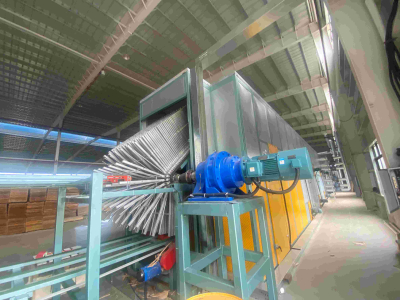
A modern veneer dryer machine is evaluated by how consistently it manages heat transfer, air movement, and humidity. Industry studies on convective veneer drying point to temperature, air humidity, and mass transfer rate as core variables in drying performance. Better circulation and staged control allow the veneer dryer to dry more uniformly across the production width, improving usable recovery instead of merely pushing more material through the line.
Why the 8–12% Window Matters for Bonding
For plywood pallets, bond quality is not a cosmetic detail. It determines whether panels can tolerate stacking, forklift handling, transport vibration, and humidity changes. SenTong’s plywood wooden pallet information highlights the use of phenolic or melamine fortified resins and notes that proper kiln drying helps optimize adhesive penetration and curing.
This is where a core veneer dryer becomes especially important. Core layers are not always visible after assembly, but they carry structural responsibility. If their moisture content is inconsistent, glue-line strength can vary from panel to panel. In contrast, properly dried core veneers support stable bonding and help finished dryer plywood deliver more consistent mechanical performance.
From Recovery Claims to Practical Yield Gains
The 15% figure should be understood as a high-value benchmark, not a universal promise. Research and industry reporting have described advanced veneer drying approaches with recovery improvements in the 10–15% range under specific conditions. Other modern systems report smaller but still meaningful gains through optimized hot-air circulation and reduced re-drying.
For a production manager, the practical question is not only whether a veneer dryer machine can reach a headline number. The better question is where losses occur today. If a line suffers from frequent over-drying, moisture variation, cracked veneer, and repeated re-drying cycles, the improvement potential is much higher. If the current process is already tightly controlled, gains may come more from energy efficiency and consistency than from dramatic yield recovery.
How Better Drying Improves Dryer Plywood Quality
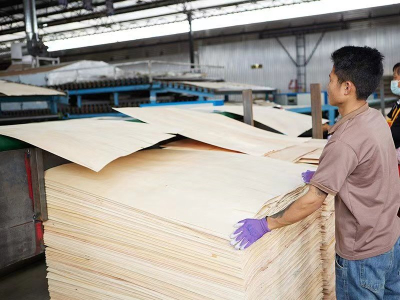
High-quality dryer plywood begins with veneer layers that behave predictably under pressure. Uniform moisture helps panels remain flatter, reduces internal stress, and supports more consistent density. These qualities are especially valuable for export packaging and logistics pallets, where the platform must protect cargo through loading, storage, container transport, and unloading.
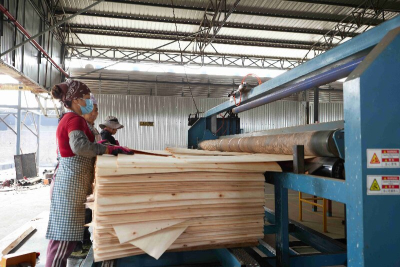
A veneer dryer also affects downstream efficiency. Flatter veneer stacks feed more smoothly into layup, pressing, trimming, and assembly. Fewer warped sheets mean less manual sorting and fewer interruptions. For plywood pallet applications such as a Shipping Plywood Pallet, stable plywood construction helps support lightweight handling, cargo protection, and practical international freight use.
What Changes After an Upgrade
A useful way to evaluate a veneer dryer machine upgrade is to compare the operating pattern before and after modernization.
| Production Area | Conventional Drying Pattern | Modern Drying Objective |
|---|---|---|
| Moisture output | Wider variation between sheets | More stable final moisture range |
| Sheet quality | More cracks, warp, and brittle edges | Fewer drying-related defects |
| Re-drying | Frequent correction cycles | Reduced rework and smoother flow |
| Bonding | Higher risk of glue-line variation | More consistent adhesive curing |
| Yield | More downgrade and trimming loss | Higher usable veneer recovery |
The strongest gains usually appear when the core veneer dryer is paired with disciplined process control: correct sorting before drying, moisture checks after drying, and drying schedules matched to veneer thickness and species. In that sense, the equipment upgrade is only part of the improvement. The full benefit comes from treating drying as a quality-control system.
Energy Stability Supports Yield Stability
Energy efficiency is often discussed separately from yield, but the two are connected. When a dryer wastes heat or operates with unstable temperature zones, operators may compensate by raising temperatures or extending drying time. That can increase the risk of overdrying.
Modern drying strategies focus on keeping conditions stable enough to remove moisture without damaging the veneer surface. In industrial studies, model-based control and drying schedule optimization are repeatedly linked with better energy use and reduced risk of over-dried or re-dried sheets. For dryer plywood producers, this means the best veneer dryer setup is not simply the fastest one; it is the one that produces the most usable sheets at a stable cost.
Choosing the Right Upgrade Path
Before investing in a veneer dryer machine, manufacturers should review the real sources of loss in their own line. Useful checks include final moisture distribution, re-drying frequency, rejected veneer percentage, glue-line failures, press defects, and trimming loss. These measurements help determine whether the priority should be airflow balance, temperature zoning, humidity control, maintenance, or moisture inspection.
For pallet buyers, the same logic supports supplier evaluation. A plywood pallet supplier that controls veneer moisture before assembly is better positioned to deliver stable panels and reliable pallets. In engineered plywood pallet production, the drying step is not hidden background work; it is a foundation for bonding, flatness, and service performance.
Conclusion
Upgrading a veneer dryer can improve yield because it attacks the defects that quietly drain value from plywood production: moisture variation, overdrying, warping, cracking, and weak bonding. A modern core veneer dryer supports better control of inner layers, while stable drying conditions help manufacturers produce stronger, flatter, more consistent dryer plywood.
For plywood pallet manufacturing, the point is straightforward: better drying creates better panels, and better panels create more reliable pallets. A carefully selected and properly managed veneer dryer machine can become a practical driver of material recovery, energy discipline, and finished product quality.
FAQs
How does a veneer dryer improve veneer yield?
It improves yield by reducing moisture variation, re-drying cycles, brittle sheets, warping, cracking, and bonding-related rejection. More sheets remain suitable for panel assembly.
Is 15% yield improvement realistic for every factory?
It depends on the starting condition of the drying line, veneer species, initial moisture, maintenance, and process control. The highest gains are usually seen where existing losses are significant.
Why is core veneer moisture so important?
Core layers carry structural loads inside the plywood panel. If a core veneer dryer does not control moisture evenly, hidden glue-line weakness or internal stress can reduce panel reliability.
What moisture level is suitable for plywood pallet veneer?
For SenTong plywood wooden pallet production, veneers are described as kiln dried to 8–12% moisture content before panel assembly, supporting dimensional stability and adhesive performance.
How does drying affect dryer plywood used in pallets?
Consistent drying supports stronger bonding, flatter panels, reduced warping, and more reliable handling performance in logistics and export packaging applications.