
Why Thick Veneer Drying Costs Must Be Verified End to End
Thick core veneer fundamentally changes what "low cost" truly means in plywood veneer drying. While the purchase price is important, it rarely tells the whole story of your daily operational results. When using a cut-first-then-dry production flow, the real decision centers on whether the entire Veneer Drying System—from feeding to heating, cooling, and discharging—aligns with your specific veneer thickness, output targets, labor plan, and spatial limitations. This article explores what buyers typically assess when specifying a veneer dryer machine for thick veneer applications, drawing on documented product information for vertical, roller, and mesh configurations.

Rethinking Metrics: Thick Veneer Demands a Different Approach
For plywood veneer drying, thick veneer often requires a distinct evaluation compared to thin face material. A dryer optimized for very thin veneer won't automatically be a good fit for core plate or bottom plate work. This is why many buyers begin the specification process by focusing on the veneer itself—its thickness, flatness expectations, and the intended production route—before even looking at brochure capacities.
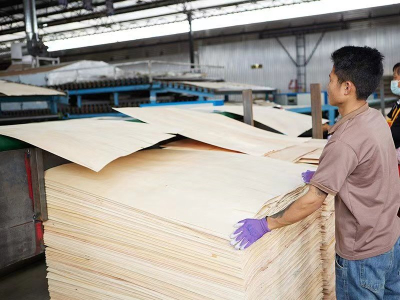
Consider the Vertical Veneer Drying Machine, for instance. It's designed as a vertical tunnel-type core veneer dryer primarily for core plate, partial surface, and bottom plate. It excels in the cut-first-then-dry production process, particularly for thick veneers, and can accommodate veneers with low flatness requirements.1
For procurement teams, the immediate practical lesson is clear: a truly Low Cost Veneer Dryer isn't just a "cheaper machine." Instead, it's a veneer dryer machine whose workflow and operating plan inherently suit thick veneer drying, preventing hidden costs in labor, energy, or material handling from surfacing later.
Evaluating the Complete Veneer Drying System: From Start to Finish
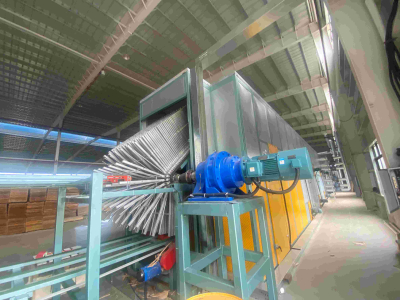
A consistent structure across various dryer descriptions highlights a four-part system layout. The vertical veneer drying machine, for example, is composed of a Feeding area, Heating area, Cooling area, and Discharging area.1 This identical four-section design also characterizes face mesh and roller-style systems used in plywood production.5
This shared structure provides a robust framework for buyers to create a disciplined checklist for any veneer dryer machine:
Will the feeding mechanism seamlessly handle your veneer's cutting and stacking methods?
Can the heating section achieve the target throughput using your chosen heat source?
Does the cooling process effectively minimize the risk of moisture reabsorption as material exits?
Is the discharging system compatible with your labor force and downstream logistics?
An end-to-end evaluation is crucial for avoiding misunderstandings about "low cost" claims. A Veneer Drying System might seem affordable initially, but its true cost emerges only after factoring in factory layout, staffing, and material flow.

Feeding and Loading Density: The Initial Cost Lever
For thick veneer drying, feeding performance directly impacts machine utilization. The vertical core veneer dryer highlights three-dimensional loading of veneer, and notably, the equipment occupies only two-thirds of the area of a roller dryer.3 Separately, the vertical plywood method is noted for increasing veneer loading capacity by 30–80% compared to other dryers.2
This is why buyers often compare dryers based on "throughput per square meter" rather than just nameplate output. If a Vertical Veneer Dryer can load more veneer within a smaller footprint, it can significantly reduce the effective cost per cubic meter, even before considering energy consumption.
Equally important, the same descriptions mention that this equipment requires on-site assembly at the customer’s factory, allowing for installation tailored to specific location requirements.1 For plant engineers, this directly influences the planning of feeding lanes, forklift routes, and staging zones around the veneer dryer machine.
Heating Section Choices: Configuration is Key
For the vertical veneer drying machine, the heat source is a 900,000 kcal hot air stove.1 The machine's length is determined by the required output, with options for custom designs to meet specific project needs.
In thick veneer drying, these two points are more critical than they might first appear:
Precise heat source definition prevents erroneous comparisons. Buyers sometimes mix parameters across different dryer categories. By linking the heat source selection directly to the configured machine, one avoids assuming that features from one model automatically apply to another.
Output-matched length supports realistic capacity planning. In plywood veneer drying, "required output" usually serves as the primary variable. Once this is established, the Veneer Drying System can be appropriately sized.
Thus, a Low Cost Veneer Dryer is often judged by its heating configuration's ability to meet planned output without excessive heat consumption or creating bottlenecks upstream.
Cooling and Discharging: Addressing Labor and Moisture Risks
Cooling is a non-negotiable aspect of many continuous processes; it ensures dried veneer exits in a usable state. The vertical veneer drying machine clearly delineates feeding, heating, cooling, and discharging sections.1 This clear segmentation simplifies the process for procurement teams to assign responsibilities and estimate staffing.
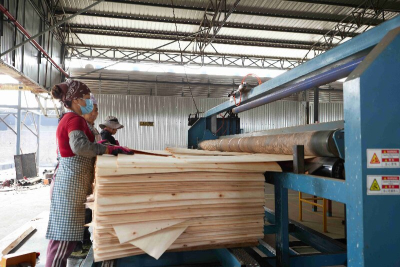
Labor requirements are also documented for vertical configurations. The vertical veneer drying machine specifies 2 workers per shift.1 Another vertical plywood veneer configuration (FBH30-20) requires 3 workers, noting that the burner operator can also perform concurrent tasks like operating a forklift.2
What matters is that labor is a measurable component of the Veneer Drying System cost model. A veneer dryer machine that seems inexpensive on paper can quickly become costly if discharging demands additional manual handling or if staffing doesn't align with shift planning.
Defining a "Low Cost Veneer Dryer"
The vertical dryer is accompanied by several cost-related statements that buyers can use as evaluation benchmarks:
Its drying cost is less than $8/M³, which is cited as 30–60% of the drying cost of other dryers.1
The machine cost is described as low, attributed to the standardization and modular production of its parts, which reduces raw and auxiliary material loss and enhances working efficiency.1
These statements are most useful when connected to the overall production flow:
Loading capacity: The vertical plywood method boosts loading capacity by 30–80%.2
Footprint: It occupies only two-thirds the area of a roller dryer.3
Labor: Documented as 2 workers per shift for the vertical veneer drying machine,1 with another vertical configuration requiring 3 workers.2
Application fit: It's ideal for cut-first-then-dry processes and thick veneers, and suitable where flatness requirements are low.1
This comprehensive combination transforms a "Low Cost Veneer Dryer" from a mere marketing phrase into a verifiable purchasing proposition.
Vertical, Roller, and Mesh Options: Understanding Their Unique Roles
In plywood veneer drying, the most reliable comparison hinges on "fit to veneer and process," rather than simply determining which dryer category is "best." Product descriptions clearly define their respective roles:
Vertical (Core-Focused): The Vertical Veneer Dryer is positioned for core plate, partial surface, and bottom plate. It suits cut-first-then-dry processes, especially for thick veneers, and works well for veneers with low flatness requirements.1
Roller (Broad Thickness Range): A 40m, 2-deck wood veneer dryer machine (model GTH30-40) features a working width of 3m, dries veneer thicknesses from 0.6–8mm, and offers a capacity of 2.5 m³/h (55–65 cbm per day).4 It comprises an inlet, drying area, cooling area, and outlet, and can be customized based on production capacity, process, and space.
Mesh (Very Thin Face Veneer): Face veneer drying systems are specifically designed to dry very thin face veneer, typically in the 0.2–1.2mm thickness range. These mesh dryers also consist of feeding, heating, cooling, and discharging areas.5
| What buyers validate | Vertical Veneer Dryer | Roller Wood Veneer Dryer Machine (example) | Mesh Face Veneer Dryer |
|---|---|---|---|
| Target veneer use | Core plate / partial surface / bottom plate | Veneer drying in plywood line | Face veneer |
| Thickness focus | Especially thick veneers | 0.6–8 mm | 0.2–1.2 mm |
| Process framing | Cut first then dry | Continuous; inlet–drying–cooling–outlet | Continuous; feeding–heating–cooling–discharging |
| Flatness expectations | Suitable for low flatness requirements | Not specified in the cited description | Flat without buckle or end waviness |
| Cost anchor (stated) | Less than $8/M³ composite drying cost | Not stated in the cited description | Not stated in the cited description |
This kind of comparative table keeps the Veneer Drying System discussion anchored to purchasing criteria that can be directly verified against production objectives.
Purchasing Checklist for Thick Veneer Cut-First-Then-Dry Lines
Before finalizing a veneer dryer machine selection, buyers typically request a system-level review that links daily output requirements to factory layout and staffing. For thick veneer drying with a cut-first-then-dry approach, key validation steps usually include:
Confirm veneer type and whether accommodating low flatness requirements is acceptable.
Map the entire production route across feeding, heating, cooling, and discharging.
Verify the specified heat source and the overall configuration strategy (including machine length sized to output).
Estimate labor per shift using documented staffing figures for the chosen configuration.
Compare footprint and loading density alongside the target operating cost.
By completing these checks, a "Low Cost Veneer Dryer" becomes a measurable outcome of the entire Veneer Drying System, not merely a line item on a quotation.
FAQs
What does a Vertical Veneer Dryer typically include in its documented process?
It is composed of four main parts: Feeding area, Heating area, Cooling area, and Discharging area.
Is the Vertical Veneer Dryer designed for thick veneer drying?
Yes. It is explicitly suited for the production process of cutting first and then drying, particularly for the drying of thick veneers.
Can the Vertical Veneer Dryer be used when flatness requirements are strict?
It is described as suitable for veneers with low flatness requirements.
How many workers per shift are specified for the vertical veneer drying machine?
The documentation for the vertical veneer drying machine specifies 2 workers per shift.
What heat source is specified for the vertical veneer drying machine?
It uses a 900,000 kcal hot air stove as its heat source.
How is the length of the vertical veneer drying machine determined?
The length is determined by the required output, and it can be custom-designed according to the customer’s project requirements.
What veneer thickness range is specified for the 40m, 2-deck roller wood veneer dryer machine?
The specifications indicate a veneer thickness range of 0.6–8mm.
What veneer thickness is the face mesh dryer designed for?
It is designed for very thin face veneer, typically between 0.2–1.2mm.