
How One Plywood Factory Cut Energy Costs by 30 Percent
For plywood manufacturers, the drying section is often where profit quietly disappears. Moisture variation, warped sheets, cracked veneer, and excessive fuel use can all show up later as poor glue bonding, panel defects, and unstable output. In this case study, we share how one plywood factory improved its drying process with a modern veneer dryer solution from Shandong Shine Machinery Co., Ltd, combining biomass heating, controlled airflow, automatic speed regulation, and continuous roller conveying to reduce energy costs by about 30% while improving dryer plywood consistency.

Why Drying Became the Factory’s Bottleneck
Before the upgrade, the factory’s older drying line created a familiar problem: operators could not consistently bring fresh veneer to the target moisture range without over-drying some sheets and leaving others too wet. That imbalance affected downstream gluing and pressing, where dryer plywood needs stable moisture, flatness, and a clean surface condition.
The most visible losses came from three areas. First, inconsistent final moisture made grading more difficult. Second, warping, buckles, wrinkles, and end waviness caused panels to lose stability during pressing. Third, cracked or broken veneer reduced usable yield. In a documented Shine Machinery customer case, after the new dryer entered production, the wood veneer scrap rate dropped from 5% to 0.3%, saving more than 800,000 yuan per year. For a mill processing large volumes daily, that kind of scrap reduction can matter as much as direct energy savings.
The Upgrade Strategy Behind the Veneer Dryer Machine
The factory selected a continuous roller-based veneer dryer machine because it needed both lower energy use and more predictable quality. Shine Machinery’s product range includes 2-deck, 4-deck, and multi-deck configurations, with working widths that can be customized from 3 m to 6 m in related product lines. For mills comparing a China veneer dryer manufacturer or China veneer dryer supplier, the key lesson is simple: capacity alone is not enough. The drying line must also control moisture, airflow, heat transfer, and transport speed together.
One relevant product reference is Shine’s Wood Drying Equipment, which is designed to dry veneer with uniform moisture content, keep sheets flat, and prepare the surface for gluing. In practical production, these quality goals are closely connected to energy use. When a line dries unevenly, operators often slow the machine, raise temperature, or repeat drying, all of which increase operating cost.
Biomass Heating Turned Waste Wood Into Useful Energy
A major reason the new veneer dryer reduced cost was the use of biomass heating. Shine Machinery describes waste wood and wood chips as economical fuel options for veneer drying lines. In this setup, waste material from peeling and trimming can be used through a biomass burner, helping the plant reduce dependence on more expensive external heat sources.
Shine’s biomass system burns wood chips, waste wood, and similar materials at high temperature. The burner provides heat energy to the drying equipment, supporting a drying temperature range commonly listed at 140–200°C, with temperature control accuracy of ±5°C on several models. For a plywood plant, this matters because dryer plywood quality depends on stable heat, not simply high heat. Too little heat leaves wet spots; too much or poorly distributed heat can increase stress and surface defects.
Better Control Helped Stabilize Core Veneer Dryer Output
The second change was automatic temperature and speed regulation. Shine Machinery’s core veneer dryer models commonly list veneer transport speeds from 5 to 22 m/min with frequency-controlled traction motors. This gives operators a practical way to adjust drying time according to veneer thickness, initial moisture, and production target.
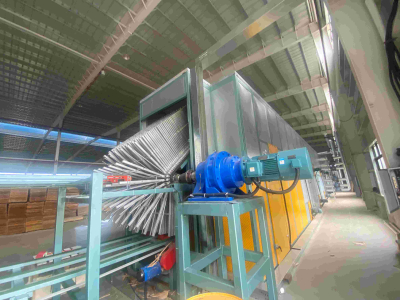
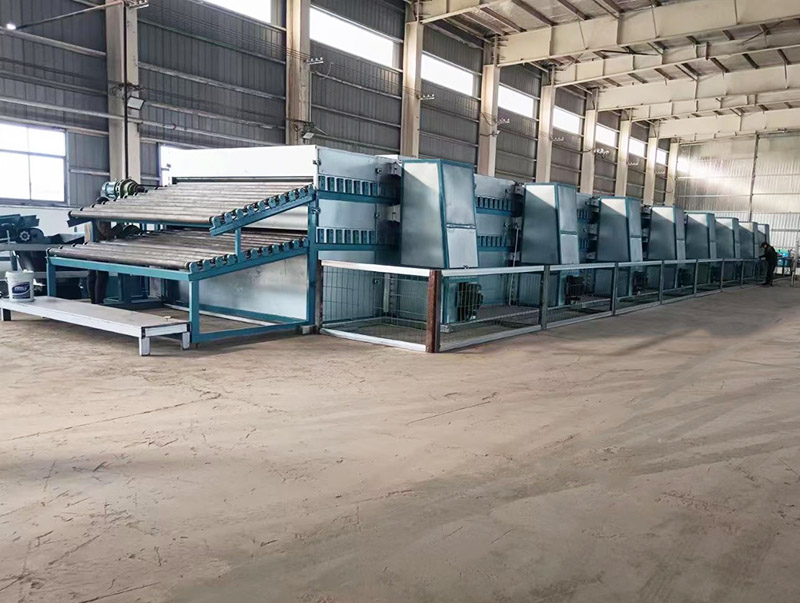
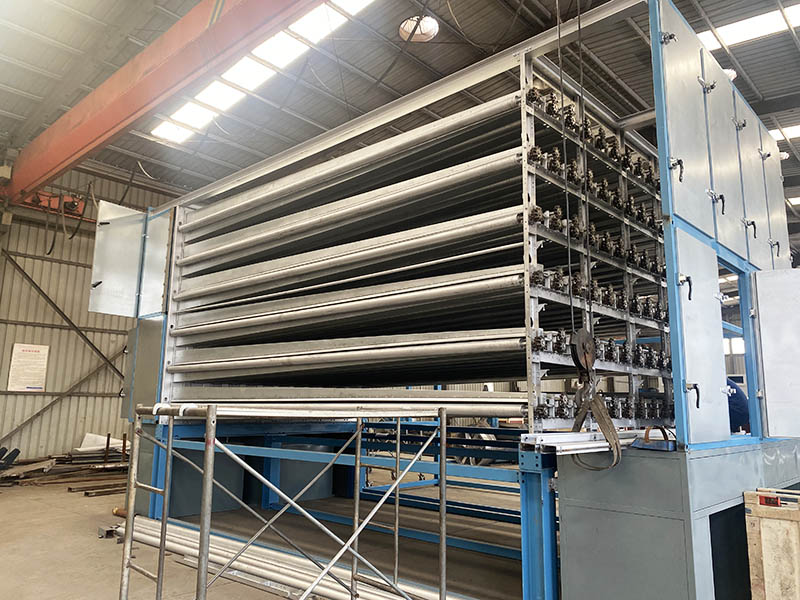
The Continuous Core Veneer Dryer Machine uses synchronized upper and lower pressure rollers to keep veneer moving continuously and reduce the chance of jamming. Its drying process combines blowing heating from air jet pipes with contact heating from pressure rollers, improving heat transfer across the sheet. Both hot air and cold air blowers use 5.5 kW axial flow fans, and the product page states that this design reduces total installed power by more than 35% while meeting air-volume requirements.
Where the 30 Percent Energy Reduction Came From
The factory’s energy reduction was not the result of one isolated component. It came from the way the full veneer dryer system worked together. Biomass heating reduced fuel cost pressure. Step-by-step heat exchange helped distribute hot air more evenly. Axial flow fans reduced installed power demand. Automatic speed and temperature control reduced repeated drying and overcorrection by operators.
Shine Machinery publishes model examples that show the relationship between installed power and actual electricity consumption. The GTH30-32 2-deck model lists total power of 86.5 kW and actual electricity consumption of about 61 kWh per hour. The GTH30-20 4-deck automatic model lists total power of 145.5 kW and actual consumption of about 100 kWh per hour. The GTH30-52 continuous core model lists total power of 125 kW and actual consumption of about 88 kWh per hour. These figures help buyers compare realistic operating demand instead of looking only at nameplate capacity.
For large-capacity production, Shine also offers the 20m Automatic Veneer Dryer Machine, a 4-deck model designed for higher output applications. Its listed configuration includes Q235B φ102 special shaft tube rollers, automatic temperature control, speed regulation, and a biomass burner option, all of which support more stable dryer plywood production.
Quality Results Beyond the Power Bill
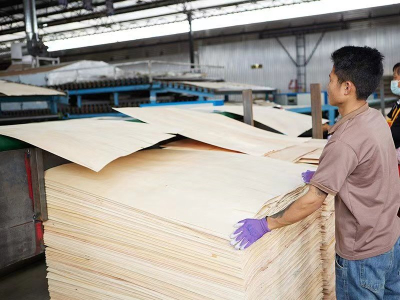
Energy cost was the headline result, but the quality improvement was equally important. Shine Machinery describes dried veneer from its machines as having uniform moisture content, flatness, no end waviness, no buckles, no wrinkles, and good surface condition before gluing. Those outcomes directly influence plywood pressing because the glue line performs best when veneer sheets enter the press at controlled moisture and with stable geometry.
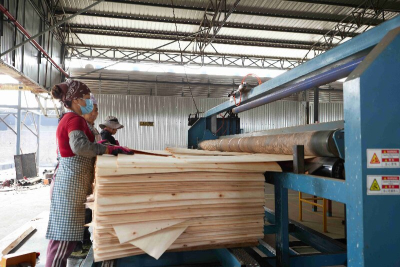
The Roller Dryer For Veneer page also highlights advanced hot air circulation and a precision control system for drying different veneers evenly. In the factory case, the practical result was a smoother production rhythm: fewer rejected sheets, less rework, and more predictable scheduling around the press line.
Buyer Checklist for Selecting a Veneer Dryer
For mills evaluating a new veneer dryer, the most useful purchasing discussion should go beyond price. A China top veneer dryer factory should be able to discuss the following points clearly:
Capacity and layout: drying capacity, working width, deck number, heating length, cooling length, and available plant space.
Veneer range: thickness range, short or long veneer compatibility, and expected final moisture.
Heat source: biomass burner, steam boiler, thermal oil boiler, natural gas burner, or steam generator options.
Control system: automatic temperature control, speed regulation, frequency control, and operating simplicity.
Energy indicators: total installed power, actual electricity consumption, fan design, and heat-exchange arrangement.
Service support: overseas installation guidance, commissioning, operator training, online assistance, and debugging videos.
Shine Machinery also highlights digitalized production, precision cutting, 72-hour load testing, and modular design on its factory information, which are useful reference points for buyers comparing suppliers. More product details and model parameters are listed at www.veneersdryer.com.
FAQs
What is the main role of a veneer dryer in plywood production?
A veneer dryer removes moisture from fresh veneer before gluing and pressing. Its performance affects veneer flatness, moisture consistency, bonding condition, and final plywood quality.
How did the factory reduce energy costs by about 30%?
The reduction came from a combined system: biomass heating, improved heat exchange, axial flow fans, controlled hot air distribution, and automatic speed and temperature regulation.
What final moisture range can Shine Machinery equipment support?
Several Shine Machinery models describe drying fresh veneer to about 8–10% or about 10% moisture, depending on the model and production requirement.
Why is a core veneer dryer important for dryer plywood quality?
Core veneer affects panel stability and glue-line performance. A stable core veneer dryer helps reduce wet spots, over-drying, warping, wrinkles, and end waviness before pressing.
What heat sources are available for Shine Machinery drying lines?
Product pages mention biomass burners, steam boilers, thermal oil boilers, natural gas burners, and steam generators as heat source options for different plant conditions.
Where can buyers review Shine Machinery product details?
Buyers can visit www.veneersdryer.com to review product pages, model parameters, installation cases, and related veneer drying solutions.